Most businesses do not actually have a software problem. They have several good pieces of software that do not talk to each other, and a person in the middle re-typing the same lead into each one — once when it books, again when it becomes a customer, and again when it gets reported on.
The joining-up problem
A booking system that does not tell the CRM. A CRM that does not tell the marketing platform. A form on the website that lands in an inbox instead of anywhere a follow-up gets tracked from. Each tool works fine on its own — the failure is entirely in the gaps between them, and the gaps are where leads actually get lost.
What breaks when nobody is watching the gap
- A lead re-typed by hand is a lead re-typed with errors — a transposed digit in a phone number is a lead nobody can reach back.
- Whoever does the re-typing becomes the bottleneck. If they are out, behind, or simply human, the data lags behind reality by however long it takes them to catch up.
- Reporting gets built from whichever system was updated most recently, which is rarely all of them at once — so the numbers different people are looking at do not agree.
- Every manual step is a place a lead can be dropped entirely, not just delayed.
The systems are not the bottleneck. The person retyping between them is.
What an integration actually does
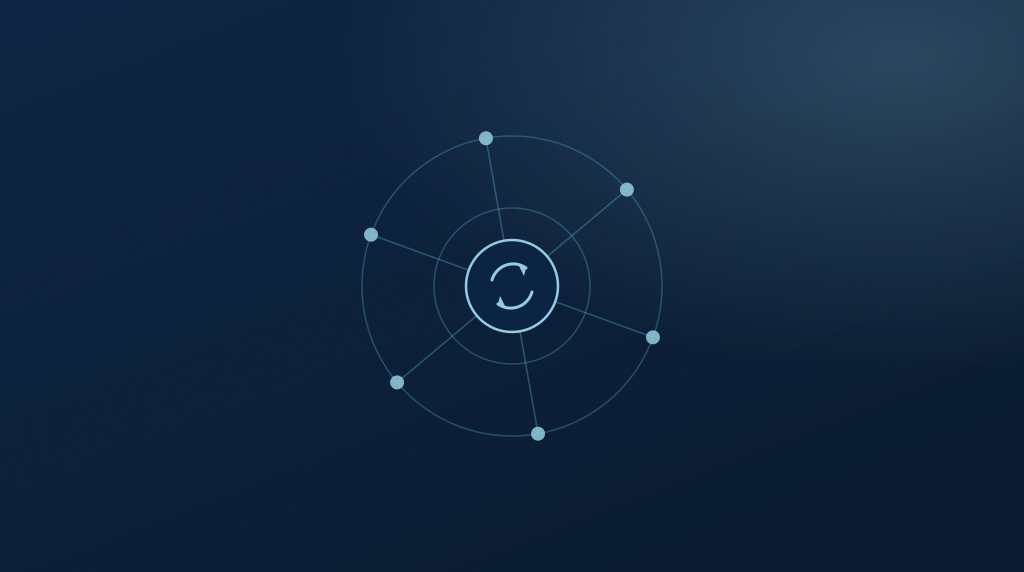
Custom integrations connect the software your business already runs on, so a change made once is a change made everywhere — a two-way, real-time connection rather than a nightly export somebody has to remember to run.
- A tailored API built to what your specific systems need, rather than a generic connector that covers half of it.
- Two-way, real-time sync — a lead captured in one place appears in the other immediately, not by the next business day.
- Encrypted connections built for sensitive data, not a workaround bolted on afterward.
- HIPAA-compliant integration for healthcare businesses, where patient data has to move correctly the first time.
How to find your own gap
The gap is usually easy to spot once you go looking for it, because it shows up as a specific, repeatable annoyance rather than a mystery:
- Does a lead captured on your website show up in your CRM by itself, or does someone have to move it there?
- If a booking is made by phone, does it appear on the same calendar as one made online — and can both ever double-book the same slot?
- When a customer's details change in one system, do they change everywhere, or only in whichever one happened to get updated?
- How much of a new hire's first week is spent learning where the same piece of information lives in four different places?
A yes to any of the first three, or an honest answer of "most of it" to the fourth, is a gap worth closing — and usually the same one, wearing different clothes.
The gap also compounds with scale. One location retyping between two systems is an inconvenience. A multi-location or franchise business doing the same thing at every site is the same inconvenience multiplied by every location, with no two sites necessarily even making the same manual mistake — which is exactly when a fix made once, applied everywhere, stops being a nice-to-have.
Where this pays for itself fastest
The clearest case is a lead's first ninety seconds — captured through web chat, Messenger or SMS, synced to the CRM without anyone touching it, and visible on the Business Portal dashboard the moment it lands. Nobody had to notice the lead arrived for the follow-up to start on time, which is exactly the point — the fastest response wins, and the fastest response is the one that did not wait for a person to type it in somewhere else first.
If you are not sure where your own gap is — which system is not talking to which — that is a reasonable thing to ask us directly, or start with a free growth proposal built around what you are already running.
Frequently asked questions
- Will this work with the CRM I already use?
- Through API integration, connections can be built to nearly every CRM platform on the market — the goal is to connect what you already run, not to make you switch systems.
- Do I have to manually move data over once it's set up?
- No. Once connected, customer interactions, leads and data captured in one system sync automatically to the others — that manual step is exactly what the integration removes.
- Is this secure enough for sensitive customer data?
- Connections are encrypted end to end, and for healthcare businesses the integrations are built to be HIPAA compliant, so patient data is handled to that standard rather than a lower one.
- What kinds of systems can actually be connected?
- Booking and scheduling tools, CRMs, marketing platforms, and most software with an API — the specific combination depends on what your business already runs, which is worked out case by case rather than off a fixed list.