
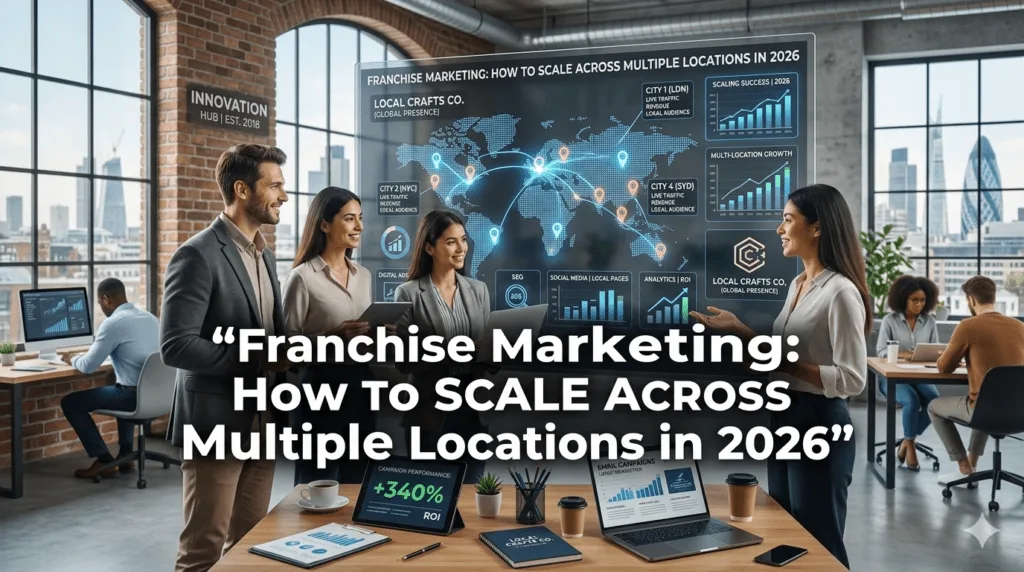
Marketing a franchise is fundamentally different from marketing a single-location business. You need brand consistency across every location, localized relevance in every market, centralized reporting that gives corporate visibility, and empowered franchisees who can engage their local communities — all without everything falling into chaos.
The franchises winning in 2026 have figured out this balance. And the data shows just how much it matters: top-performing multi-location brands generate 66% more social media engagement and 215% more reviews than the average, according to research from SOCi.
Here are the strategies that separate thriving franchise marketing operations from struggling ones.
Build a Centralized-Local Hybrid Model
The most effective franchise marketing model in 2026 isn't fully centralized or fully decentralized — it's a hybrid. Corporate provides the brand guidelines, approved messaging, creative assets, and technology platform. Individual locations execute locally with the autonomy to adapt to their specific communities.
This means corporate creates the playbook, and franchisees run the plays with local customization. Corporate ensures brand consistency; local teams ensure community relevance.
Optimize Every Location's Google Business Profile
Every single franchise location needs its own fully optimized Google Business Profile. This includes accurate location-specific information, local photos, local reviews, and regular posts. A franchise with 50 locations needs 50 individually managed GBP listings — each one treated as its own local business.
This is where most franchises fail. They set up profiles during the grand opening and never touch them again. In 2026, Google rewards active, fresh profiles. Locations that haven't posted or received new reviews in 30+ days are losing visibility.
Vizible's franchise marketing platform manages GBP optimization across all locations from a centralized dashboard — while maintaining location-specific customization.
Vizible Franchise Solutions
Manage Reputation at Scale
Reviews need to be earned and managed at every single location. A franchise's overall brand reputation is only as strong as its weakest location's review profile. Implement automated review request systems at every location, centralize review monitoring so corporate can spot issues quickly, and empower local teams to respond to reviews with approved templates that still feel personal.
Vizible Multi-Location Brand Management
Run Localized Paid Advertising
National brand advertising builds awareness, but it's localized paid campaigns that drive foot traffic to individual locations. Allocate paid advertising budget to location-specific campaigns on Google and social media, targeting the trade area around each location.
Research shows that customers within a 3-mile radius account for 78% of a franchise location's revenue. Your paid advertising should reflect that reality.
Provide Franchisees with Content and Tools
Franchisees are operators, not marketers. Don't expect them to create content from scratch. Give them a library of pre-approved social media posts, email templates, ad creative, and local marketing materials they can customize. The easier you make local marketing, the more consistently it gets done.
Track Performance Per Location
Aggregate data is useful for corporate strategy, but per-location performance tracking is where the real insights live. Which locations are generating the most leads? Which have declining review scores? Which are underperforming on search visibility? Vizible's Business Portal provides both location-level and aggregate franchise reporting.
Vizible Business Portal
Learn about Vizible's franchise marketing solutions → vizibleagency.com/services/franchise-marketing
Frequently asked questions
- Who should control marketing in a franchise — corporate or the franchisee?
- Split it by what each side actually knows. Corporate owns the brand, the standards and the facts that must be identical everywhere. Franchisees own the local texture — photos, community involvement, the specifics of their market. Trouble comes from centralizing the second or devolving the first.
- Why does each franchise location need its own page?
- Because one page cannot rank for several cities. A combined locations page is a weak answer to every individual local search, and it loses to competitors with a full page about that market. Each location needs its own page with genuinely different content.
- How do you keep branding consistent across dozens of locations?
- By making the correct version easier to use than the wrong one. Centralize the facts and the assets in one system, give each location only the access it needs, and audit quarterly. Consistency fails through access problems, not discipline problems.
- Should franchisees run their own ads?
- Local budget with central structure works best. Franchisees know their market and their timing; corporate should own the account structure, the creative standards and the measurement, so spend can be compared across locations and the lessons travel.